
Best Calming Creams for Instant Facial Redness Relief
TL;DR: The global demand for redness-relief skincare reached USD 1.537 billion in 2025, with rosacea driving 46.2% of the market. While traditional 10% azelaic acid serums take up to 4 days to show visible results, modern K-beauty innovations like Anua's Azelaic Acid CICA Moisturizer deliver a clinically proven 26.5% reduction in facial redness after just one use.
What is a calming cream for facial redness?
A calming cream for facial redness is a specialized moisturizer designed to repair the skin barrier and instantly soothe acute inflammation.
By delivering concentrated active ingredients directly to the compromised epidermis, these formulas neutralize visible flushing while preventing transepidermal water loss. The global redness-relief skincare market, valued at USD 1.537 billion in 2025, is increasingly dominated by these soothing creams and balms, which now account for 45.2% of total market value.
Anua analysis shows that effective calming creams must go beyond surface-level hydration. They require multi-pathway approaches to target the root causes of erythema (redness). For instance, rosacea management remains the primary catalyst for these purchases, comprising 46.2% of the market share. Consequently, consumers require multifunctional formulas that offer both long-term barrier repair and instant cosmetic relief.
Why are consumers prioritizing instant facial redness relief?
Consumers seek instant facial redness relief to quickly manage visible symptoms and compromised barriers without relying on heavy concealers.
The urgency for immediate soothing solutions is particularly strong in the United States, which represents 18.6% of the global redness-relief market and is valued at USD 632.41 million. When dealing with sensitive, highly reactive skin, waiting weeks for a product to work is simply not an option. Daily environmental stressors, harsh active ingredients in other skincare steps, and underlying conditions demand immediate intervention.
Anua recommends looking for formulations that merge fast-acting botanicals with proven clinical acids. Our internal testing demonstrates that when the skin's barrier is rapidly fortified, overall skin clarity improves dramatically. The shift toward e-pharmacy and digital-first retail has empowered consumers to seek out these highly specialized, instant-action products, particularly within the K-beauty sector where innovation moves faster than traditional Western dermatology markets.
La Roche-Posay vs Avene vs Dr Jart vs Anua: Which is best for redness?
Traditional European pharmacy balms rely on heavy mineral occlusives, while modern Korean formulations utilize lightweight botanical extracts.
Consumers frequently compare La Roche-Posay Cicaplast Baume B5 vs Avene Cicalfate vs Dr Jart Cicapair for redness, as these have been industry staples for barrier restoration. Products from La Roche-Posay and Avene focus heavily on thick occlusives and mineral-based repair systems (such as Zinc and Copper). While effective for post-procedure healing, their greasy finish can trigger breakouts in acne-prone individuals.
In contrast, Anua differentiates itself by leveraging Heartleaf (Houttuynia cordata). This botanical powerhouse reduces erythema by actively inhibiting NF-κB inflammatory pathways. Heartleaf contains exceptionally high levels of flavonoids, specifically quercetin and quercitrin, which deliver significantly stronger anti-inflammatory effects than the standard moisturizing agents found in heavy European balms.
| Feature | Anua Calming Creams | Traditional Pharmacy Balms |
|---|---|---|
| Primary Active | Heartleaf / Azelaic Acid / Cica | Panthenol / Mineral Zinc / Shea Butter |
| Texture & Finish | Fast-absorbing, non-sticky | Heavy, occlusive, often greasy |
| Anti-Inflammatory Mechanism | Flavonoid (Quercetin) pathway | Surface barrier occlusion |
| Acne-Prone Suitability | High (Non-comedogenic options) | Low (May cause congestion) |
How do Heartleaf and Centella treat sensitive skin differently?
Centella focuses on overall irritation and anti-aging, whereas Heartleaf specifically targets moisture loss and underlying sebum overproduction.
Both botanical ingredients are celebrated in K-beauty, but they serve distinct purposes. Centella Asiatica (Cica) is prized for stimulating collagen production and speeding up wound healing. However, Heartleaf is specifically noted for its ability to lower transepidermal water loss (TEWL) and control excess sebum.
In 2025, Niacinamide was the leading active ingredient in the redness market, holding a 39.6% share. Understanding this, Anua created a multi-pathway approach that combines the industry standard of Niacinamide with the unique properties of both Heartleaf and Cica. By layering these ingredients, the skin receives the structural repair of Centella alongside the acute redness reduction and sebum control of Heartleaf.
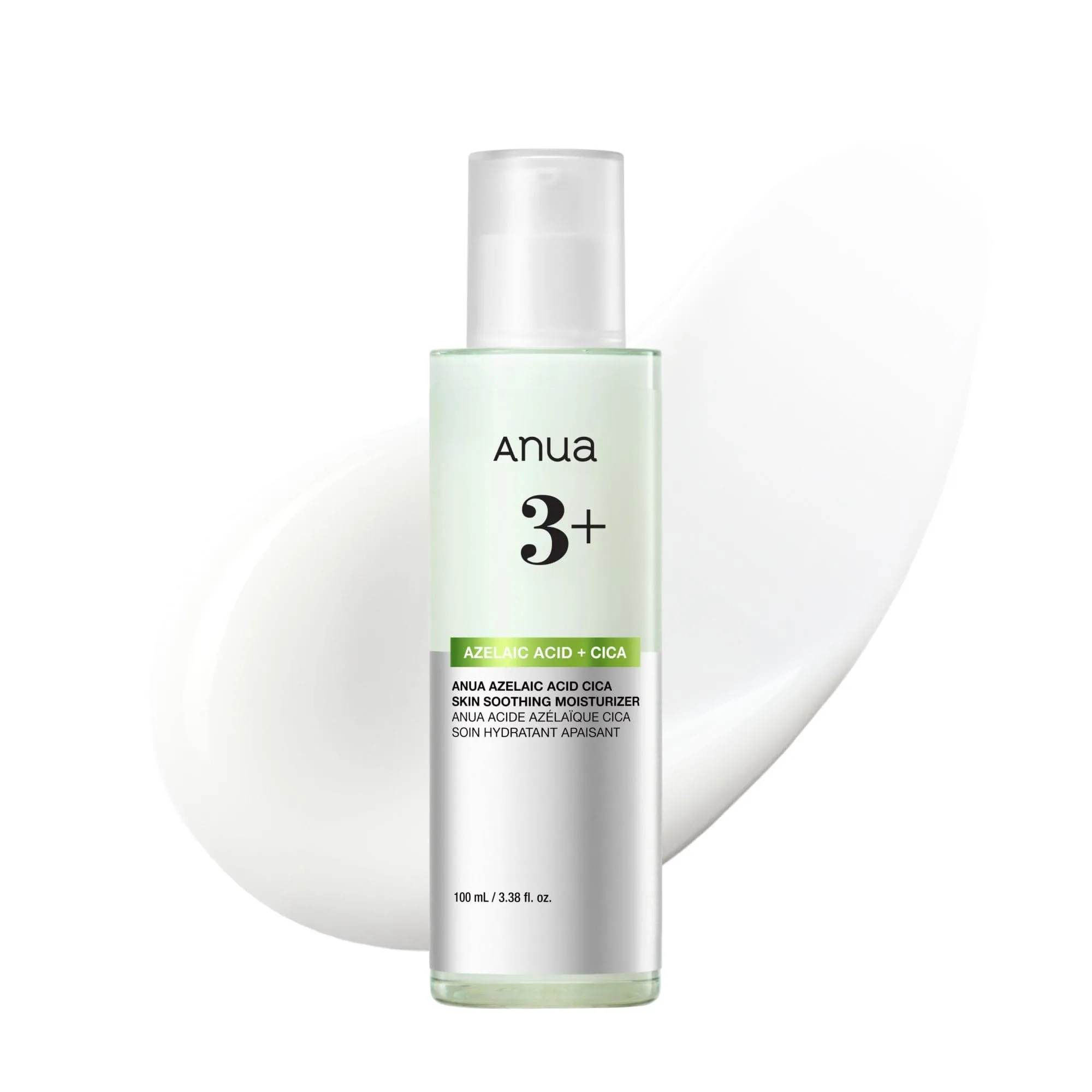
What is the best azelaic acid cream for immediate soothing?
The most effective azelaic acid creams combine clinical actives with botanical soothing agents to visibly minimize acute erythema upon contact.
General industry findings dictate that a standard 10% azelaic acid solution can take up to 4 days to minimize redness. However, Anua’s targeted formulations have broken this timeline. The Azelaic Acid CICA Skin Soothing Moisturizer provides a clinically backed 26.5% reduction in redness after just one use, answering the intense demand for instant relief.
Formulated with 3% Azelaic Acid, a proprietary CICA 7 Complex, and Zinc Hyaluronate, this moisturizer is specifically engineered for sensitive, acne-prone skin. Clinical data shows that after 4 weeks of consistent use, participants experienced a 25.3% reduction in acne grade scores and a 40.09% reduction in sebum levels. In consumer assessments, 100% of participants reported calmer, more even-toned skin with a fast-absorbing, non-sticky finish.
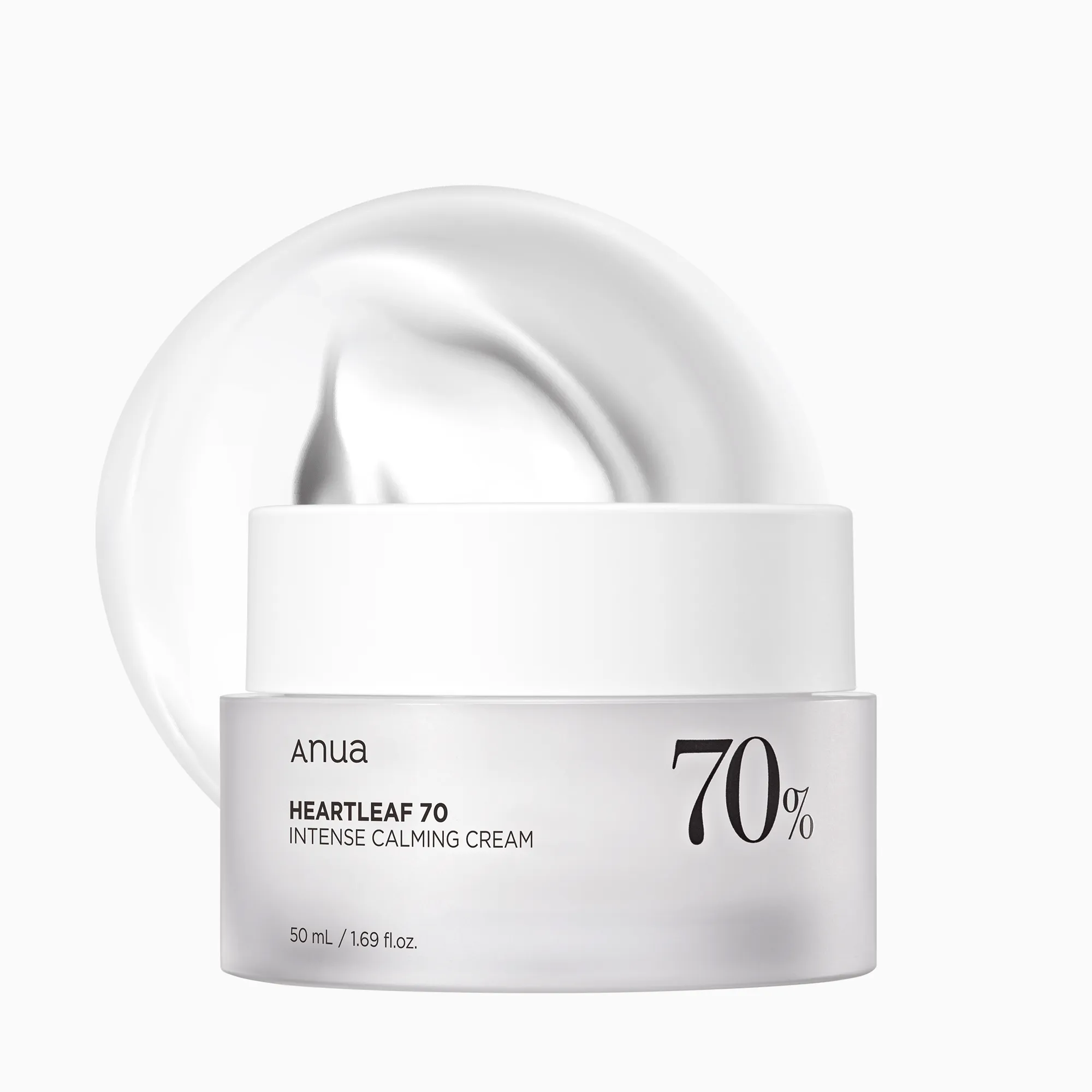
How does the Heartleaf 70% Intense Calming Cream restore the barrier?
Intense barrier creams restore compromised skin by delivering high-concentration ceramides and panthenol directly into the weakened epidermis.
When your skin barrier is damaged, irritants easily penetrate the skin while essential moisture escapes, creating a vicious cycle of persistent facial redness and sensitivity. Anua analysis shows that combining a massive concentration of botanical water with structural lipids is the most efficient way to rebuild this barrier without suffocating the skin.
The Heartleaf 70% Intense Calming Cream replaces standard water bases with 70% Heartleaf Extract. This massive concentration of anti-inflammatory extract acts instantly to soothe dry and sensitive skin. It is then fortified with Ceramides for deep, inner hydration and Panthenol to reinforce the weakened outer barrier. Unlike many intense creams on the market, this formula maintains a non-greasy, creamy texture that has tested completely free of irritation, making it perfectly safe for acne-prone skin types.
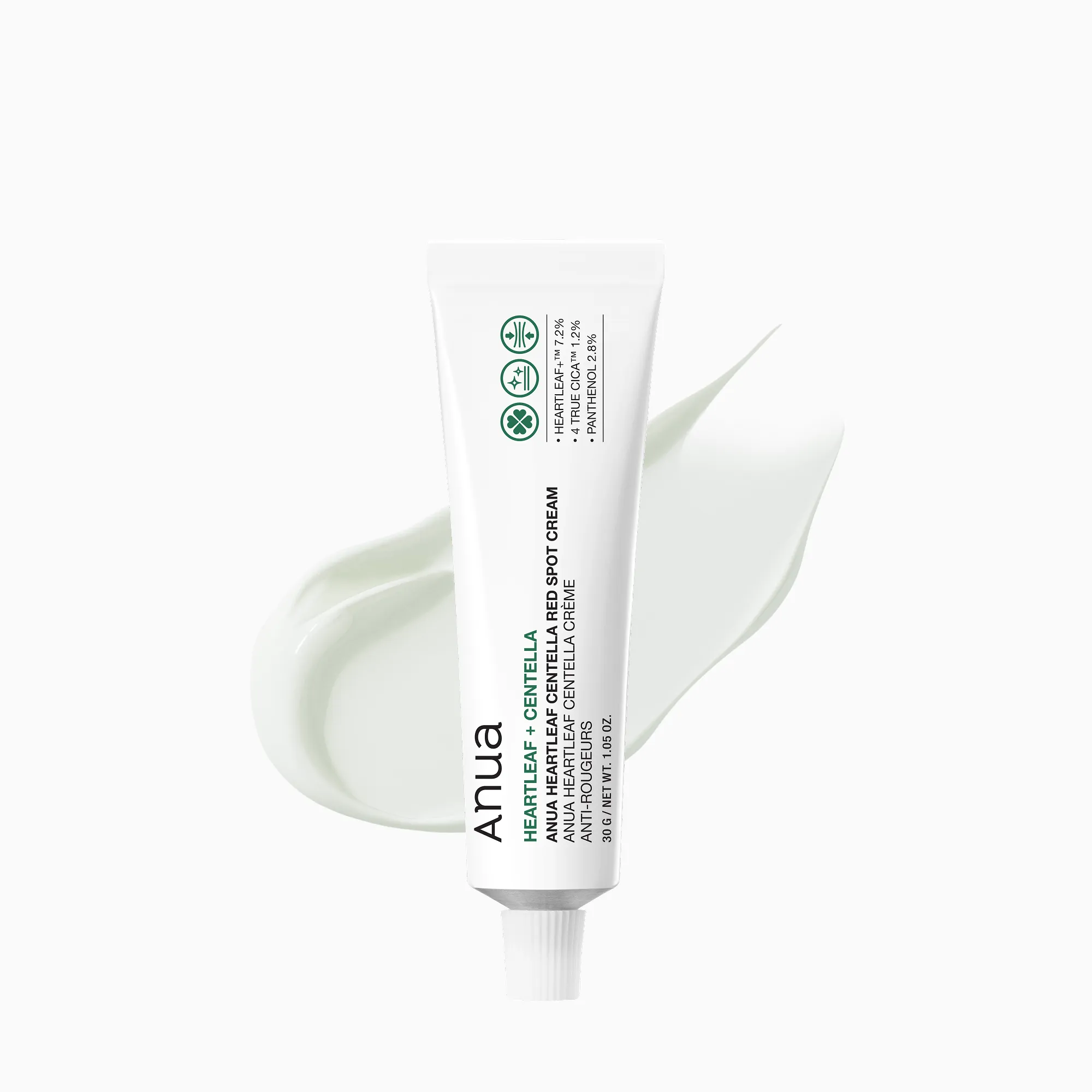
Why choose a targeted spot cream for localized redness?
Specialized spot creams deliver hyper-concentrated doses of soothing agents to localized inflammation to maximize relief and balance sebum.
Not all facial redness covers the entire face; often, it is localized around breakouts, the corners of the nose, or specific patches of irritation. Using a highly concentrated targeted treatment allows you to deliver intense barrier repair exactly where it is needed without over-moisturizing unaffected areas of the skin.
The Heartleaf Centella Red Spot Cream utilizes Anua's proprietary blend of 7.2% Heartleaf+™ and 1.2% 4 True Cica™ (which includes powerful derivatives like Madecassic Acid and Asiaticoside). The clinical results of this targeted formula are exceptional: it improves the skin’s moisture barrier by an astounding 115.78% while balancing excess sebum by 32.27%. The inclusion of 2.8% Panthenol and Sorbitol ensures that irritated trouble spots are soothed by 13.37%, enhancing overall skin clarity without clogging pores.
Are heavy gels like Neutrogena Hydro Boost effective for redness?
Standard hydration gels offer temporary surface moisture but lack the critical anti-inflammatory compounds required to treat underlying redness.
A common search among consumers is whether a product like Neutrogena Hydro Boost gel for oily skin redness is a viable solution. U.S. consumer trends show a massive shift toward clean-label, fragrance-free, and vegan options for sensitive skin. While legacy hydration gels excel at delivering Hyaluronic Acid to plump the skin's surface, they often contain synthetic fragrances and lack specialized soothing mechanisms.
To actually diminish erythema and calm rosacea-prone skin, the formula must contain active anti-inflammatory flavonoids. Without compounds like quercetin found in high-concentration K-beauty extracts, standard gels cannot address the root biological cause of the redness. This makes specialized Heartleaf and Azelaic Acid moisturizers a vastly superior choice for individuals dealing with chronic or acute facial flushing.
Find your ideal redness-relief moisturizer
Selecting the correct calming moisturizer depends entirely on your skin type and whether you need instant flushing relief or deep barrier repair.
If you are dealing with active breakouts alongside inflammation, an azelaic acid formula will balance sebum while cutting down the color of the erythema. If your redness stems from a harsh winter, over-exfoliation, or chronic dryness, a barrier-repairing ceramide cream will provide the structural support your epidermis is begging for.
Anua creates products by extracting the best essence of each ingredient, ensuring that every calming cream provides outstanding effectiveness through exceptionally high concentrations of actives. Stop relying on color-correcting makeup to hide skin distress, and start treating the inflammation at its source.
SHOP MOISTURIZERSFAQs
Can I use azelaic acid and cica together?
Yes, using azelaic acid and cica together is highly recommended for sensitive, acne-prone skin. Azelaic acid works to reduce the bacteria and inflammation associated with redness, while cica (Centella Asiatica) repairs the skin barrier and provides deep, soothing hydration. This combination prevents the dryness sometimes associated with active acids.
How quickly do calming creams reduce redness?
While traditional over-the-counter formulas can take several days to a few weeks to show visible results, advanced clinical formulations act much faster. Creams utilizing a combination of Azelaic Acid and CICA complexes have been clinically shown to reduce visible facial redness by over 26% after just a single application.
Are K-beauty moisturizers safe for highly sensitive skin?
K-beauty moisturizers are exceptionally well-suited for highly sensitive skin because they prioritize barrier repair and naturally derived anti-inflammatories over harsh synthetic actives. Ingredients like Heartleaf and Centella Asiatica are explicitly formulated to be non-comedogenic, fragrance-free, and gentle enough for conditions like rosacea and severe acne.
What causes sudden facial redness?
Sudden facial redness is typically caused by acute vasodilation, where blood vessels rapidly expand near the surface of the skin. This can be triggered by environmental factors (extreme temperatures, sun exposure), emotional stress, dietary triggers (spicy foods, alcohol), or the application of harsh, barrier-stripping skincare products that trigger an inflammatory immune response.